Chris C. Welch — Fractional GTM & Growth

Fractional GTM & Growth · London · UK, US and EU

Turn commercial uncertainty into a practical route forward.

Fractional go-to-market strategy, business development and sales systems for founders and teams that need clearer customer focus, sharper positioning and practical commercial follow-through.

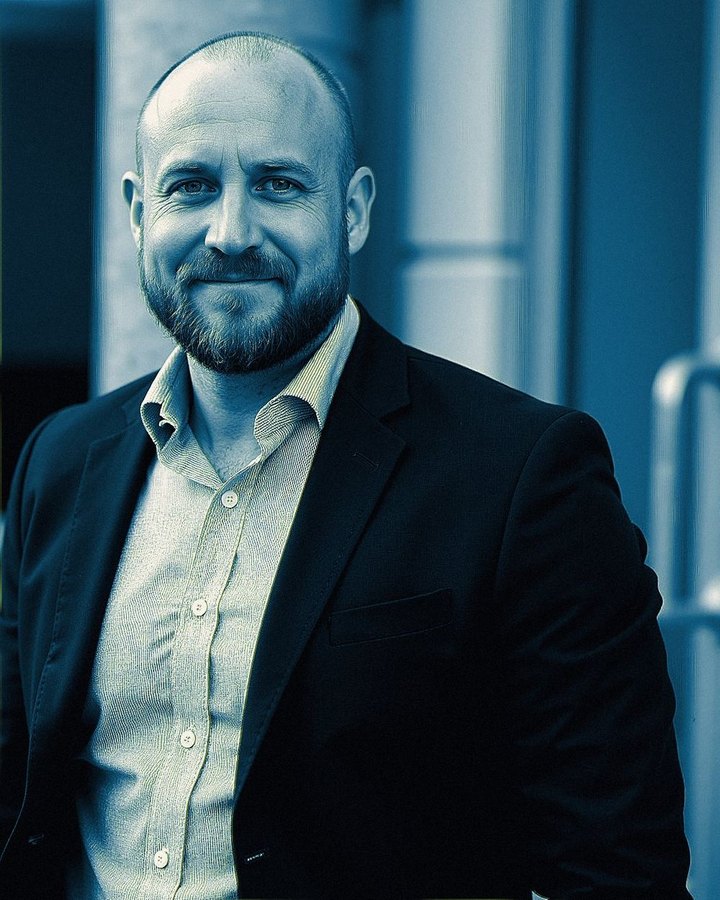
Chris C. Welch

What Chris C. Welch GTM is

My London-based fractional GTM and growth consultancy. I work with founders, owner-led businesses and lean commercial teams that have something valuable to sell but need greater clarity around their market, message, priorities or route to growth.

Commercial progress depends on several connected things: customer fit, positioning, evidence, operational capability, sales activity, CRM discipline and follow-through. I bring those parts together, find where progress is being lost, and turn commercial intention into action.

Why fractional

A senior commercial hire in London is a six-figure commitment made before you know whether the role is right, and months of notice before anyone starts.

Fractional gives you the experience of a commercial operator without the salary, the notice period or the risk of a permanent hire.

You benefit from the same senior experience against a defined scope and a defined period. You get a decision, a system or a pipeline — and you keep the option to stop, scale up, or hand over to a permanent hire once the case for one is proven.

How I work

Evidence first. Then decisions. Then the build. Then the action.

Signals → Judgement → Direction

Triangulation: three signals converging on one point

Most commercial problems are not due to a lack of effort. Activity without context, clarity and condition leads to wasted time, energy and revenue. So every engagement starts with fundamental questions — an examination that takes intentional effort.

Let’s ask the important questions

  • How does your truth match the customer’s truth?
  • What do you know vs. what you think you know?
  • What are the load-bearing decisions that will move the needle?
  • How do you ensure you always under-promise and overdeliver?
  • What does the market teach us once we act?
01

We look at you from the outside in

Before anything is built, I read your business the way a first-time buyer does — your site, your pitch, your proof, your competitors, the friction between what you say and what you can deliver, and what the customer does not know or has wrong about you. Fresh eyes are a valuable asset, because familiarity makes important gaps surprisingly difficult to see.

I also look inward at how sales functions across the business. Sales is the face of the company to the customer. It needs access to the people, information and processes behind the promise — enough understanding of capability and constraints to set expectations accurately and, wherever possible, under-promise and overdeliver. In return, what sales learns from strong customer relationships should flow back into marketing, product and leadership. Structured well, sales becomes the connection point between what the market wants, what the business can deliver, and where new opportunity leads.

02

Then we look at opportunity from the inside out

An Ideal Customer Profile (ICP) is the basis of matchmaking between your business and your customers. We start here to identify where reciprocal value exists between you and the market, then segment and prioritise opportunities by category and upside. Everything downstream inherits your ICP. That is why assuming what it is, rather than uncovering what it is, becomes expensive: the mistake quietly distorts your positioning, your targeting and where you invest your effort. I evidence your ICP, then reverse-engineer from the commercial outcome you actually want — higher margins, a stronger market position, an eventual exit — back to the accounts, segments and sales motions most likely to get you there.

03

We meet the customer where they are — and give them a reason to act

We determine your niches and scale communication. Value propositions, segment and stakeholder messaging, social media posts, sales and website copy, proposals, capability briefs, objection handling and proof points — translating what you can do into something a specific buyer has a reason to care about. Then we turn that message into a route to market: who to pursue, through which channels, with what proposition, and in what order.

04

We build the engine, and I help work it

Target accounts, stakeholder maps, outreach, qualification and follow-through, with the system underneath: CRM, pipeline stages, account planning, reporting and collateral. I build the AI layer into that — assisted research, market-signal monitoring, selective automation, and the SEO, GEO and AI-readiness work that decides whether you are findable and credible when a buyer asks an AI rather than a search engine. Technology supports the commercial judgement; it does not replace it.

Triangulation: three views overprinted; the decision is where all three agree 01 FOUNDER INTENT02 PRODUCT REALITY03 MARKET EVIDENCE
Graphic 01 / EvidenceTriangulation

Founder intent, product reality and market evidence, read together. The decision sits where all three agree.

Organic engines: inbound and outbound loops overlap into pipeline; a learning loop runs through both INBOUNDOUTBOUNDLEARNING LOOP / 57.1°
Graphic 02 / MomentumOrganic engines

Inbound and outbound built to overlap into pipeline, with a learning loop that runs through both.

AI technology stack: three sheets stacked on the 57.1 degree axis; human judgement is the visible top sheet SIGN-OFF01 DATA · 02 AI · 03 HUMAN JUDGEMENT ON TOP
Graphic 03 / IntegrationAI technology stack

Data underneath, an AI layer in the middle, and human judgement as the visible top sheet.

Earning a first sale feels rewarding, but it generally takes a considerable investment of resources. The long-term value comes from learning why a sale worked, why a job was worthwhile and how trust was earned — then turning those patterns into repeatable business, weaving a winning reputation into the DNA of the sales model.

When I help

Fractional GTM use cases

  1. You are entering a new market, or pursuing larger and more complex customers.
  2. You are a US brand building a commercial route into the UK.
  3. Referrals and word of mouth got you here, but you need a deliberate sales system.
  4. You need senior commercial cover — parental leave, a departure, or a gap you are not ready to fill permanently.
  5. You are a technology business that needs real business development, not more marketing.
  6. Your online presence and sales motion no longer reflect what you actually sell, or who now buys it.
  7. Sales activity has outgrown the CRM, collateral and qualification supporting it.
  8. Your ideal customer profile is assumed rather than evidenced, and everything downstream has inherited that assumption.
  9. You have strong capabilities that are difficult to explain consistently.
  10. Buyers are asking an AI about your category before they ever ask you.
Where to start

Three defined stages

01 · Usual first step2–3 weeks

Commercial Diagnostic

A fixed-scope engagement that establishes what is true, where you can win and what should happen next. Founder and stakeholder discovery, customer and market evidence, ICP and opportunity analysis, and a review of the positioning, proof and sales system you already have.

You get a written route-to-market decision with prioritised actions — useful whether or not we work together again.

02 · ProjectDefined scope

A defined build

The work the diagnostic points to, scoped as a project: ICP and segmentation, positioning and proof, go-to-market plan, buyer-facing collateral, target-account research, or a CRM and sales-system rebuild.

One clear deliverable, an agreed timeline, and a system your team can run without me.

03 · OngoingFractional

Fractional implementation

Hands-on business development and commercial execution as a senior individual contributor — originating and progressing opportunities, working strategic accounts and partnerships, and feeding what the market says back into the proposition.

Days per week or per month, for as long as it is earning its place.

Each stage ends with a decision, not an assumption.

Pricing is set per engagement, because scope and seniority differ by business — tell me the situation and I will tell you what it takes. Work is delivered remotely or hybrid, with in-person meetings in London and wider travel by agreement.

Selected work

Evidence of action

Collage: a hoodie, a globe with trade routes, cotton, fabric swatches and a container ship

International apparel manufacturer

An enterprise business-development programme, built from the ground up

Building the foundations of an enterprise business-development programme for a family-owned UK and Pakistan apparel business: ideal customer definition, market segmentation, target-account prioritisation, decision-maker research, buyer-facing positioning and collateral, account-specific proposals, CRM development and AI-assisted workflows.

The initial commercial build created a contact base of more than 1,100 people across nearly 400 organisations, and the programme now runs across strategic accounts, CRM improvement, market research and commercial follow-through.

Collage: a plated dish and a glass of wine against the London skyline

Founder-led events business

Turning a referral business into a targeted one

An established London events business with a strong reputation and an undirected market. I built a scored market map of 166 potential accounts and referral routes across venues, planners, agencies, cultural institutions and brands, and reduced it to a prioritised top 100.

Alongside it, the apparatus to act on it: a discovery brief, evidence checklist, relationship register and target-account framework covering customer fit, positioning, seasonality, partnerships, search visibility and CRM. The aim is a business that chooses its clients rather than waiting for them — and a way, in the age of AI, for those ideal clients to always find them first.

Collage: a creative team at work, Big Ben and a Creative Economy banner

Creative community & technology venture

From an ambitious vision to something a buyer can say yes to

Helping the founder of an ethical creative-community and technology venture turn an interconnected vision into a proposition the market can act on: structured founder, product, delivery and independent-adviser discovery; evidence and gap registers; a private research hub; positioning; offer development; a client roadmap; objection handling; and early sales-playbook material.

The discipline here is as much about what not to promise as what to sell — controls around claims sit inside the offer, so the proposition holds up under scrutiny from its first real conversation.

Clients are described anonymously while engagements are live. Named references on request, where clients agree.

About Chris

Twenty years of opening markets from cold starts, greenfield territories and whitespace.

I open markets, develop enterprise accounts and build the commercial systems that make both repeatable. My background spans enterprise software, payments, document and workflow technology, strategic accounts, destination retail, licensed merchandise and international apparel manufacturing.

Across my quota-carrying career I’ve averaged roughly 110% of target. In my most recent long-term tenure before moving to the UK — a lifestyle apparel company supplying co-branded merchandise to professional sports teams, major brands and destination retailers — that figure was closer to 170%, sustained over eight years while growing a multi-state territory from roughly $300,000 in annual revenue to a $2.7 million peak.

I moved to the UK in June 2025. The consultancy grew out of a real commercial need: what began as a sourcing-partnerships remit with an apparel manufacturer turned out to require far more than outreach — clearer customer fit, stronger buyer-facing proof, positioning, account strategy, collateral, CRM discipline, a repeatable workflow. Building those foundations while still originating opportunities is how I work. Understand the evidence, define where the business fits, translate its capabilities into a credible commercial story, build the system, and stay close enough to execution to learn from the market.

I’m a committed explorer of AI and permanently in discovery mode with it — testing where the tooling genuinely removes friction from a commercial system and where human judgement has to stay visible. The same instinct shapes how I read a business. Growth holds when it’s catalysed organically: when what’s good for the business is also good for its customer, and in B2B, good for that customer’s end user. Find where those three interests reinforce each other and the commercial motion stops needing force.

Having built my career in the United States and now operating from London, I’m well placed to help US organisations assess and enter the UK market.

Father to a son at university. Husband to a Londoner. I enjoy travel, hiking, live music, iced black coffee, spicy salsa, gardening, photography and playing the piano.

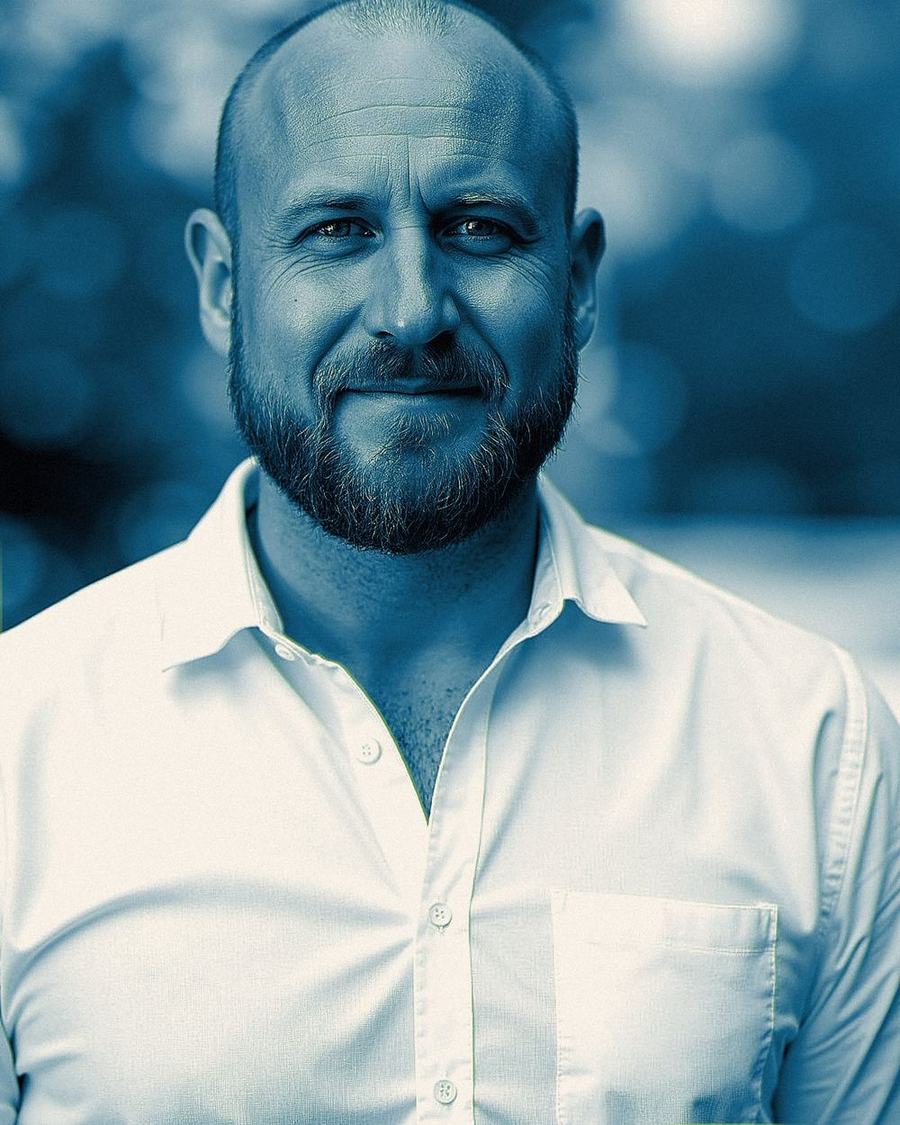
Chris C. Welch
  • BasedLondon · working across the UK, US and EU
  • Right to workUnited Kingdom and United States
  • SectorsEnterprise software · payments · workflow technology · destination retail · licensed merchandise · apparel manufacturing
  • DeliveryRemote or hybrid · in-person meetings in London · wider travel by agreement
Contact

Let’s discuss the vision first, then scope the solution.

Businesses benefit from a bespoke sales plan tailored to their particular strengths and niches, rather than a one-size-fits-all formula.

Chris C. Welch — Fractional GTM & Growth

Founder & Principal
Consultant

[email protected]

linkedin.com/in/chriscwelch

chriscwelch-gtm.com

London, UK